



Orchid Cultural Problems
Author: adminNo Comments
Blooming, Care and Culture, Growing Indoors
Discoloration of leaves can be caused by mineral deficiencies. This problem will disappear when the plants are given sufficient fertilizer. It is well worth giving suspect plants a teaspoon or two of Epsom salts (magnesium sulphate), sprinkled on the surface of the compost and watered in, once or twice a month.
- Stunted growth may also indicate a lack of nutrients, particularly nitrogen. Lack of flowers or fewer flowers than expected can also be due to an unbalanced fertilizer plan and can indicate a need for a high concentration of potassium or phosphorus in the feeding program.
- Too much fertilizer, especially nitrogen, is likely to promote very long but weak growths and thin leaves. Plants will need extra staking to prevent their breaking should this occur. Too heavy a feeding can also result in loss of leaves. Salts dissolved in the water supply, as well as chemical fertilizers or build up of excess salts in the potting medium, can cause leaf tip dieback. A generous flushing of the compost with plain water every month or so is very beneficial.
- Distortions of the foliage sometimes occur on young growths, particularly in members of the Oncidium family, and also in hybrids of Cymbidium and Paphiopedilum. This usually occurs as a result of a severe shock, such as dryness or low temperatures, during the early development of the shoot, and can be avoided by greater attention to these details for subsequent growths. It can also be a genetic defect, and, if too unsightly, plants which regularly grow in an ugly way should be abandoned.
If you enjoyed this, please share it!



Ask an Expert
Questions about orchids?
Our experts love a challenge!
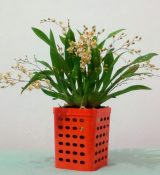
Busono
Oncidium
Photo of the Week
Submit your photo to be featured on the blog!
More Photo of the Week Winners
Submit Photo