



Is Your Orchid an Epiphyte?
Author: Melanie Dearringer2 Comments
Care and Culture, Growing Outdoors
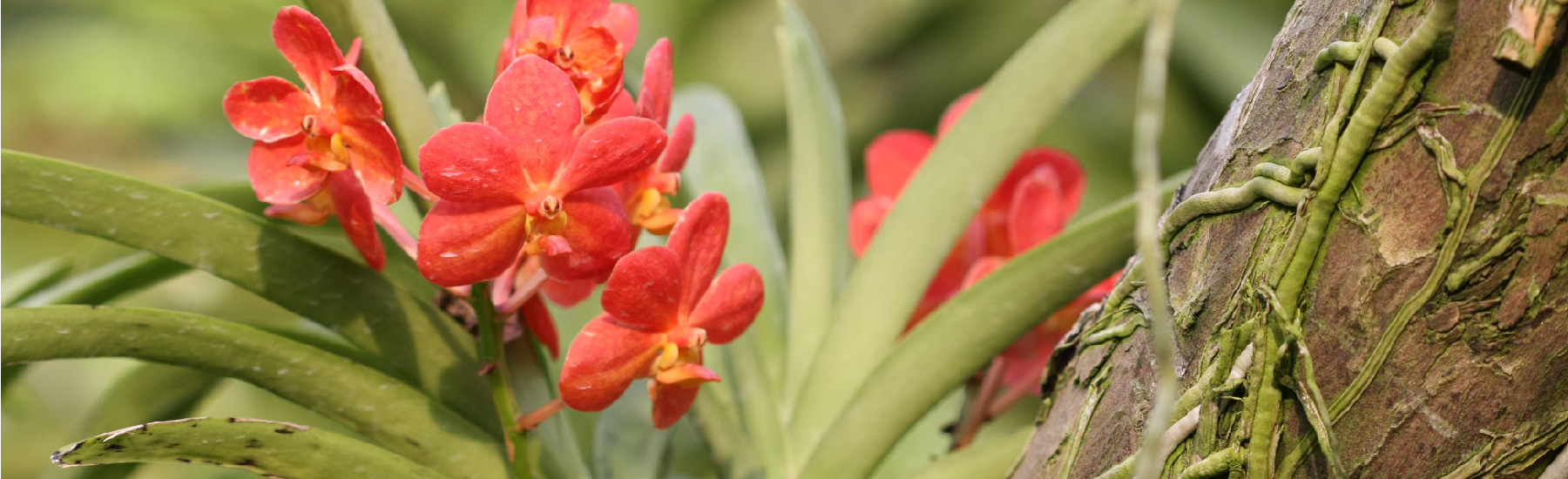
Epiphytes are plants that grow anchored to other plants. They are non-parasitic and absorb their water and nutrients from the rain, air, and other debris that collects nearby. Epiphytes make up approximately 10% of all plant species and are common among bromeliads, ferns, orchids, and many more plant groups. Epiphytes have different care requirements than those of their terrestrial counterparts. So understanding exactly how they grow in the wild can help ensure that they receive the proper care in our homes and offices.
Epiphytes in the Wild
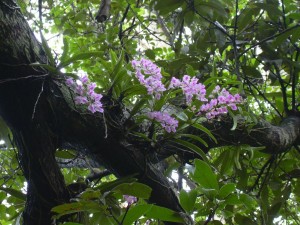
-Orchids in the wild
Most epiphytic orchids are found growing in tropical areas below the canopy of trees. They attach themselves high up in plants, typically trees, as a way to obtain more sunlight. Because their roots are not in the ground, epiphytic orchids have adapted to obtain water and nutrients differently than plants that grow with their roots buried in soil. They have thick, spongy roots that absorb and store water and nutrients from the sporadic rainfall to be used over time. Because natural rainfall isn’t a scheduled event, orchids have learned to adapt to wet and dry cycles. Additionally, some epiphytic orchids feature pseudobulbs, which specialize in water storage. Pseudobulbs help these plants better tolerate drought conditions.
How Natural Habitat Influences Care Requirements
- Potting Medium: Because these orchids grow with their roots out of the ground, they can not be potted in regular potting soil. Orchids require a light, fast draining potting medium. You can find orchid specialty mixes anywhere orchids are sold.
- Lighting: In their natural habitat, epiphytic orchids are often found in the shady understorage of trees. Too much direct light can cause the orchid’s leaves to burn.
- Air Circulation: The air flow is naturally better high in the trees where these orchids live. Providing adequate air circulation for your orchid is an important part of its health. Poor air circulation can lead to deadly diseases.
- Humidity: Humidity levels are higher in the tropical regions where most epiphytic orchids are found growing natively. The humidity helps regulate moisture and prevents them from drying out between rainfalls.
Orchids are a widely diverse group. Different genera come with their own set of specific care requirements. If you want to truly care for your orchid properly, you must know what kind of orchid you possess and do some research on that particular kind.
Mary Selby Botanical Gardens via http://www.selby.org/about/what-are-epiphytes
Wild Orchids photo credit: Harshad Sharma via http://www.flickr.com/photos/harshadsharma/22199013/
Featured image photo credit: ShinyThings via http://commons.wikimedia.org/wiki/File:RedAscocentrum-NationalOrchidGarden-Singapore-20080224.jpg
If you enjoyed this, please share it!


2 Responses to “Is Your Orchid an Epiphyte?”
Leave a Reply


Ask an Expert
Questions about orchids?
Our experts love a challenge!

Busono
Oncidium
Photo of the Week
Submit your photo to be featured on the blog!
More Photo of the Week Winners
Submit Photo
Very informative.
I have what I think is a Zimbabwean tree orchid possible botanic name bulbophylllum sandersonii. It looks like a moss covered mini tree and has a gherkinlike bulb emanating from the branches . Leaves have formed on this protrusion. I have kept the tree in a shallow dish with water which it soaks up at an alarming rate. Many little spiky shoots are now sprouting from the tops of the branches .I assume these will form flowers in due course. I would welcome suggestions on how to care for this plant. It surely cannot survive indefinetly in a water medium.