



Orchids In The North American Scene
Author: adminNo Comments
Care and Culture, Classification, Growing Indoors
In North America, climatic conditions are many and diverse. The most inhospitable regions for orchids are the desert states in the United States, where conditions are extremely hot and dry. Greenhouses or shade-cloth houses cannot be kept cool or moist enough for any but the hardiest of orchids, while indoors the constant air conditioning needed to reduce the temperature creates a very dry atmosphere, which again is unsuitable for orchids; humidity can only be kept up in an enclosed indoor growing case, for example.
By contrast, in Florida the hot, humid weather that prevails for most of the year enables tropical orchids from around the globe to be grown outdoors, and cattleyas, laelias, vandas, phalaenopsis, oncidiums, dendrobiums, encyclias, and others may be established on trees. The real challenge here lies in growing the high-altitude orchids like the odontoglossums and miltoniopsis, which are so easy in cooler areas.
The coastal areas from California to Vancouver have proved more suitable for growing cool-climate orchids outdoors, and here cymbidiums, zygopetalums, phragmipediums, and paphiopedilums thrive. Only where the night temperature drops to below 50 degrees F (10 degrees C) do the orchids need to be brought inside.
In some parts of Canada, where permafrost penetrates the ground, conventional greenhouses cannot be maintained, so instead enthusiasts grow orchids in their large basements where the house’s furnace is located. The orchids are placed on a slatted bench above staging, as they would be in a conventional greenhouse, while artificial lighting is supplied on a time switch to mimic day and night. Under these conditions, it is mostly the smaller-growing, compact orchids such as odontoglossums, brassias, masdevallias, encyclias, and paphiopedilums that do well. In the summer they benefit from a short respite outdoors in the shade.
If you enjoyed this, please share it!




Ask an Expert
Questions about orchids?
Our experts love a challenge!
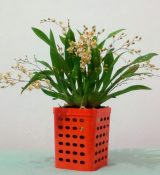
Busono
Oncidium
Photo of the Week
Submit your photo to be featured on the blog!
More Photo of the Week Winners
Submit Photo