



Orchid Offspring: All About Keikis
Author: Melanie Dearringer69 Comments
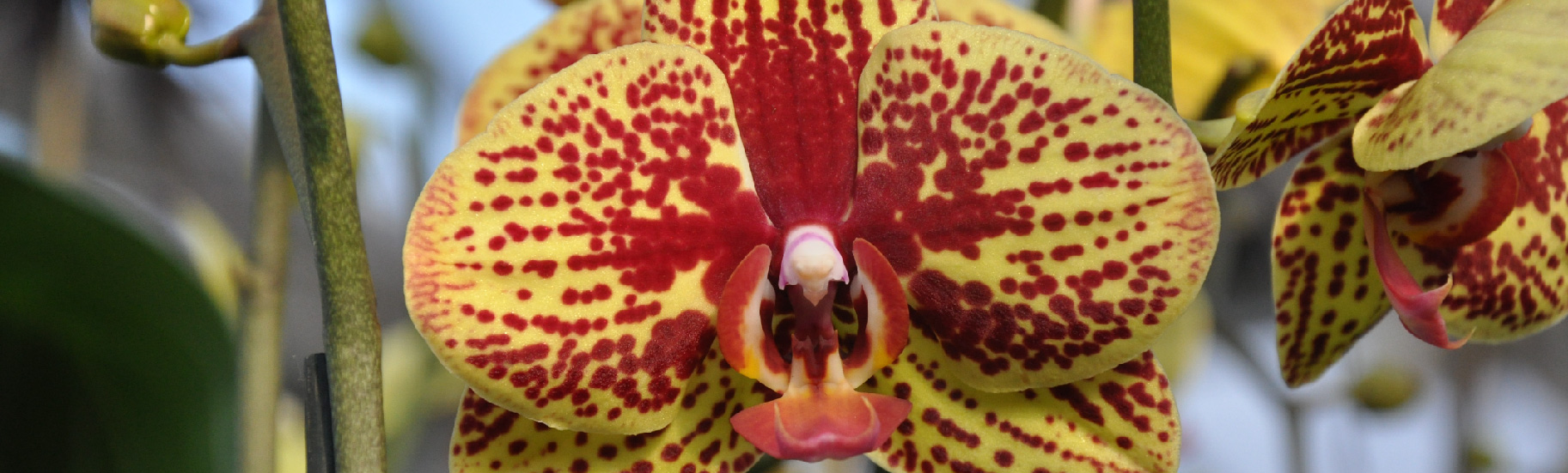
Your Phalaenopsis finished blooming and you cut back the flower spike in an attempt to induce the development of a fresh spike. You begin to notice new growth and you are undoubtedly happy. As you monitor your new growth, you are surprised to see what appears to be leaves forming. You’re left wondering what is happening to your beloved orchid.
Allow me to be the first to congratulate you. Your orchid is having a baby. We refer to these babies as keikis (pronounced kay-kees) which is the Hawaiian word for child. A keiki is the product of asexual propagation by a mature plant resulting in an exact clone of its parent.
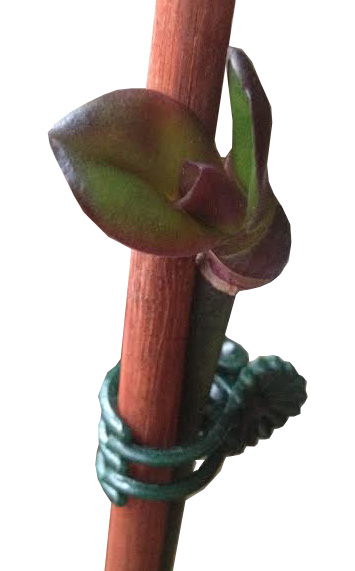
-Orchid keiki
Orchid keikis occur naturally when growth hormones accumulate at a node on the flower spike. The production of keikis can also be induced through the use of keiki paste. This paste consists of concentrated growth hormones and is applied directly to the node.
When your keiki has developed several leaves and roots approximately 2-3 inches in length, you can remove the plantlet from the parent orchid. Removing a keiki from its mother too early can cause the fragile baby to die off. Once your keiki is capable of surviving on its own you will want to use a sharp, sterilized blade to carefully remove the keiki from the mother plant by slicing the tissue at the base of the plantlet. Any time there is an open wound on your orchid, it should be treated to prevent fungal infections. You can apply cinnamon, a natural fungicide, to the cuts on both the mother plant and keiki to ward off future problems.
Once removed, you have two options. You can pot the keiki in its own 4″ container or repot the mother plant along with the keiki in the same pot. During its first year, a keiki can benefit from being potted with its mother as the mature plant will help regulate soil conditions for the sensitive baby.
Be careful not to expose your new plant to too much direct sunlight immediately after transplant. Once the keiki shows signs of growth, you can begin to gradually increase the amount of light it receives.
With the proper care, your keiki should flower between 2 to 3 years of age. You may, however, get lucky and experience flowering after just a year.
While orchid keikis are exciting, they can also be a sign that your plant is under a lot of stress. Sometimes an orchid will put off a keiki as a way of continuing its legacy if it fears that death is in the future. Keiki production should not instill panic but should act as a reminder to constantly monitor the health and happiness of your original plant.
Sources
American Orchid Society https://www.aos.org/Default.aspx?id=85
Just Add Ice Orchids http://www.justaddiceorchids.com/Just-Add-Ice-Orchid-Blog/bid/87553/From-Little-Keikis-Beautiful-Orchids-Grow
Featured image photo credit: douneika via https://www.flickr.com/photos/81918877@N00/5211779268/
If you enjoyed this, please share it!


69 Responses to “Orchid Offspring: All About Keikis”
Leave a Reply


Ask an Expert
Questions about orchids?
Our experts love a challenge!
Busono
Oncidium
Photo of the Week
Submit your photo to be featured on the blog!
More Photo of the Week Winners
Submit Photo
Read above and realized my plant is under stress and producing keiki. I believed this was healthy new growth when I saw it. Now I do not know what I am doing wrong. Have 3 oncidiums, thick or elephant leaf tye.
HELP
@ sal ashley. It would be hard to tell what exactly was putting your orchids under stress at the time the keiki were producing. I’d need to see them, or know what the plant’s symptoms were/are. But not to worry, your plant may be fine now, and you just have to decide what to do with your new plant growth (the keiki). Do your orchids appear to be unhealthy; are they blooming on their own (aside from the keiki), do the leaves appear a normal green, stem, or roots (rotting)?
Here’s more on Blooming Oncidium Orchids. Good luck!
I HAVE A KEIKI BLOOMING ON THE TOP OF THE HARD BAMBOO PART OF MY ORCHID. WILL IT DEVELOPE ROOTS FROM THAT? I’VE ONLY SEEN PICTURES OF KEIKI’S ON SOFT PLIABLE STEMS. IS THIS AN UNUSUAL THING?
This is not abnormal. It will produce roots, but you may want to remove the Keiki and take care of the parent plant unless you want to raise another orchid.
My orchis looks completely healthy, but has begun to produce a keiki. At first I thought it was just a new flower coming on the plant. Will it hurt if I leave it there or should I cut it off, wait for it to blom, or what? My plant is quite large, but I have only had it for about 2 months. It was in bloom when I received it and is as beautiful today as the first day I got it.
Although your orchid looks healthy, it must have experienced some sort of stress to promote the growth of the Keiki. I would remove it so that valuable nutrients remain with the parent orchid.
An orchid doesnt have to be stressed to produce a keiki some just do this as they age and havent been polinated. although we enjoy seeing our orchids flower, unless we have a lab and the means to propagate from seed, we dont polinate the flowers which can make some orchids (especially any hybrids that have the species ‘Phalaenopsis equestris’ in there heritage) feel the need to propagate simply to give them a shot at producing offspring, and therfor passing on there genes. the keiki is an exact replica of the parent plant which can be good if you really enjoy the flowers and when seed raising can bring about to many vairables in flower/plant shape color and form, or it can be a bad thing as this plant may have a genetic weakness to certain viruses and diseases, all in all keikies arent always a sign that your culture is not correct or sufficient , if you mother plant have healthy thick roots, lush slightly olive green succulent leaves and flowers regularly than chances are she just wants to ensure somewhere down the line her genes will get passed on whether they come from here or her cloned counterpart. Look at your orchid as a meter of health its color,shape,size and viabilty will tell you more then keikies or other standard test sometimes can…hope this helps.
Thank you for this coomon sense answer. My orchids are all pefectly healthy, however one has put out a keiki where i cut one of its flowering stems back.
My orchid has just started growing a basal keiki. I was just about to repot my plant when I have noticed it and now im not sure whether I should repot it at this stage and if it would have any impact on the keiki meaning if it would survive?
My orchid started growing a keiki after the stress of moving it. I let it grow, it did well while the mother recovered.. Now they are both thriving and I have a new flower coming and the keiki. I’m leaving the keiki untill the flower is done, then I am replanting the mother and child together. I think replanting now would stress the mother, again.
This is not a be all end all solution to why your orchid may have a keiki.
there are some orchid species that produce them all the time just because that’s what they do.
If your orchid has a keiki forming on the spike (hard bamboo thing) then your orchid is just fine. it’s just having a baby. 🙂
I think I may have 2 keiki’s on one of my orchid’s – a bud-like growth on the end of a root. The plant looks healthy, but I’ll admit that other than ideal light, better than normal humidity because it is in a bathroom, good soil as it was transplanted using orchid medium, I’ve not taken good care of it (forget to water and then water it a lot). Also, it was so side-heavy, it was hard to get it to stay in the pot and I noticed that some of the roots died and these new roots, with the “bud” are coming off the side that is more exposed. There is also a new root that has traveled several inches and is re-engaging with the soil). Should I just leave it all and see what happens? Is it better to cut off the keiki and try to propogate them while relieving stress on the main plant?
these sound like basal keikies these grow from the base of phalaenopsis orchids, along the perimeter of the crown are dormant “eyes” sometimes an orchids leaves can die back completely due to crown rot or being left in the hot sun for too long, this initiates the dormant eye/s to push out a new crown or leaves , most times with great vigor as they have the original plants root system to sustain them, this sometimes happensw with a perfectly healthy orchid as well, these grow faster the keikies that form on the flower spike as there share an initial root systme with the mother and they usually send their own flower spikes up when in season, when out of flower specimens often give an impression reminicent of a hosta plant with multiple heads of lush green growth as opposed to a singular plant in its own pot, and when in flower you can be dazzled with an extrordinary display of multiple spikes filled with flowers, assuming both mother and keikie are healthy!!!
I just found your site! I have a large keiki I let grow out until it has 2-inch roots. My mother plant also has a flower stalk that recently sprouted. Should I wait for it to bloom before removing the keiki? Or remove the keiki now?
That depends on whether or not you intend to raise the keiki. Remove it if you simply intend to care for the parent orchid. You can re-plant your keiki as soon as it has roots, there’s no real need to wait.
My small phal gave me a lovely flower stem at the same time she started the keiki. She has been brought back to health after a year of tender care. She is a healthy plant today. Now what to do with the keiki.
I have a Phal bought in July 2009, it had two original flower spikes -almost finished ( bargan basement!). Since then it has sent up spike after spike and has not been out of flower. Along with the current flower , secondry growths were made from the trimmed spikes which also flowered. Recently eight keikis have formed, 4 have been detatched and potted, 4 are slowly growing roots. Question, can an orchid ” flower itself to death” ?
The plant looks really healthy, green and perky.
Lol keiki’s are not always stress induced. its a natural orchid reproduction technique
I’ve had my orchid for five years, it sends up a bloom spike about every 4-6 months which lasts at least three months – it bore a keiki about two years ago, and today the keiki is sending up a bloom spike. The mother is sending up two bloom spikes this time. The spikes were starting before the last blooms fell off the last spike. It has a root system up into the air, and one down into the hydrating bowl. It’s never watered directly on to the chips, but is sprayed thoroughly almost every day. I think it is very happy. It certainly makes me very happy in my old age – I’m over 80, and wonder just how old my orchid actually is…
My dend bloomed and produced a keiki on the bloom, the blooms are all done and only the roots and a short stem are left. Should I remove it from the plant?
I have two orchid plants I received last year. My one was a double spike phals (made blue). It was healthy, I give it orchid feed every other month and when it finished blooming I cut the spikes down as I had found online (they had turned beige and had black spots). What confused me more is I then found my plant growing all new roots and leaves at the bottom, then one spike completely died off and the other has a Keiki. Now the main leaves (which are growing sideways out of the pot) are starting to droop. I don’t know what is going on with it. The other phals(white) I have isn’t dropping but its spike has died off completely as well. I don’t know what’s going on with them. Please help if you can. Thank you.
My Phalaenopsis has two spikes. On one spike is a keiki growing with two roots, and a flower spike coming out just above where the keiki came out. The other spike on the same orchid has two flower spikes coming out. I thought “wow” my orchid is healthy but now I don’t know. Should I remove the keiki to allow her to use her energy on the blooming?
I have an Phalaenopsis orchid that is producing a keiki and a new spike at the same time, it is also producing new roots. I have had a previous keiki which i have potted on and is developing well. should I remove the current keiki or let it develop for replanting
My best friends mom doesn’t exactly give ideal care to her orchids, quite sad really and one day I noticed one of her pretty orchids had a keiki! I got excited and took it home, I will make sure the baby gets ideal care unlike the mother, poor thing.
Hello!
I have a Phalaenopsis which has five keiki plants on its old flower spikes and another one near its root, at the level of the substrate! (They started to grow last november on a very slow riythm, and only two of them have a very little root). And I am concerned about the mother plant… Its leaves are turning a purple colour and looks like it is dieing… Is there anything I can do to help it?
Purple is likely too much direct sun.
My orchid stem produced 2 keiki offspring but the stem and original plant has died. Do I replant in new orchid bark? Not sure how to remove from stem.
How far gone is the mother plant? Do your keikis have roots yet?
Help! I KNOW my mother PLANT IA under stress because the leaves ATE LOOKING LIKE THE PLANT IS DYING. They ARE soft AND LOOK like they WANT RO shrivel UP
I believe ITS because I transplanted TOO SOON after I got it from the FLORIST. I ALSO DIDN’T CUT THE FLOWER STEM OFF AND MY plant HAS BEEN TRYINFtrying TO GROW IT ALSO AND HAS used UP ALL the PLANTS ENERGY. AO now what SO I DO? The baby LOOKA healthier than THE mother plant should I CUT IT off and KEEP it in the SAME pot OR LET MY MOTHER plant DIE AND start fresh?
Does your Keiki have roots yet?
My vandas keiki is having flowers or blooming already. Is it really unusual?
It is not entirely unusual, especially if your keiki has roots and is ready to be transplanted to it’s own pot. Sounds like you have some happy orchids!
I recently bought A PHALAENOPSIS AT A SUPERMARKET BECAUSE IT HAD A KEIKI STARTING AND IT SEEMS TO BE GROWING REALLY FAST! OVERALL THE MOTHER PLANT IS HEALTHY BUT THERE ARE 2 LEAVES THAT HAVE BROWNISH/BLACK MARKS (WHICH LOOK KIND OF VEINY) ON THEM RIGHT IN THE MIDDLE. dO YOU HAVE ANY IDEA WHAT THIS MIGHT BE? SHOULD I CUT THE LEAVES? I HAVE QUITE A FEW PHALS AND HAVE NEVER SEEN THIS TYPE OF LEAF DAMAGE. THANK YOU FOR YOUR INPUT!
It’s possible it has a disease or fungal infection. Try lowering humidity and reducing watering a bit to see if that helps. If not, send us a photo to orchids(at)orchidplantcare(dot)com
Thanks! I will send the picture. I also have another question that I will post.
After Reading this article, i am wondering if my Orchid is in some sort of stress with a Keiki on it, what can i do to help the main plant….to save it? Also, i do understand the use of fungisides and sterilizing tools but i have spoken to several prize winning Orchid groWers at shows that inasked about the sterilizing of the tools and they acted like i was crazy! They say as long as they are clean thats fine, but the answer i got along with It was…”there is no sterilizIng in the wild where the orchids grow! So why would you do it now?” I now have a plant with 2 keikis on one flower stem. And i want to transplant then soon and inwant to try and save the main plant….i’m totally confused noW as i have never sterilized my tools and have plants that lived 10 years or more! I’m confused…can you help? Thank you!
my oRchid has 3 large keiki with healty rooTs. I was waiting to pot them to ensure They Were strong. All 3 noe have flower spikesas does the mother plant. Any adviIce? Leave them and let the bloom? Take them off and plaNt them?
Yes, it’s perfectly fine to leave them on until they are all finished blooming. It can be quite pretty to have them all bloom at once!
Help! My orchid it’s dying from a fungal infection (the mother plant) and has developed three keikis with one of them quite big. The problem is the biggest keiki which its about two or three inches in length (the biggest leaf) does not have roots yet. I would really like to save this plant. The biggest keiki is not getting any water because the roots of the mother plant it’s rotted so bad that they are black so my guys is its that no water can pass through anymore to get to the keiki. The biggest leaf on the keiki is shift because it’s starting to starve from lack of water. Can I still cut it without root formation and still have a chance of the keiki surviving? Please help!!!
Sorry about the mistakes, I’m using my cell phone and it has auto correct and word prediction. I hope you understood what I wrote.
If you think it can hold out a little longer in order to start producing roots, try that. If it starts to die before it has roots, then it probably won’t live off the plant without roots either. One thing to note is what KIND of keiki it is. If it’s Basal, that means it is located at or near the base of the orchid and shares a root system with the mother plant (these cannot be separated). If it is Apical, this means it grows from the apex of the stem of an orchid and will produce its own roots. An apical keiki should only but cut off once it has a few roots growing (use a sterile blade and treat the cut areas with cinnamon, which acts as a natural fungicide).
You could spray mist it as some have said in articles I have a friend that puts his water into the centre of the plant a few drops with an eye dropper that is how they would get it in the wild/dew
Mother phal is all but gone and there is a spike with a keiki. can i cut the spike and put it in water to try to save it until it grows roots and can be planted? thanks for your help!
I have pegged down my keiki with roots into another pot (like a STRAWBERRY)
Hi please help I was so happy when I seen a new spur shooting from my orchid. It has been dormant for the last 2 years but I refused to give up on it. It then started to grow lovely green new leaves and fresh roots and then what I thought a flower spike. I now see it has turned into a baby orchid. It has a base baby on it since last year which still hasnt flowered either? This new baby seems to be growing from a spike. Is it possible the mother plant is coming to an end because it hasnt flowered in so long? I really want it to flower again as it has such an amazing flower colour.
It sounds like your orchid is producing a keiki. This is a new orchid, that when big enough, can be removed from the main plant and repotted (see instructions in the blog post above). Sometimes keiki’s are produced as a last ditch effort from a plant that isn’t doing well. While your main plant may die, this new keiki will grow into a new beautiful orchid plant and eventually flower.
I just found this information. My orchid has 4 of these on 2 stems they are all now 3 years old and have 4 leaves each as does the parent and have just started to put out aerial roots so I guess I should remove them from the parent now.
I NEED HELP!!!!! I just accidently cut off my newly growing Baby orchid from the stem before the first two leave have fully grown. To make matter worse as I was removing it I Broke the stem right below the New baby leaves. I’m so scared. Can I save it or is it gone forever??!! Please reply asAp!!!
Kylie, does the keiki have any roots growing?
Hi, my orchid is dying it has one small leave left which was a new one before all the rest wouldn’t yellow and fell off! Now all the roots are dead and the two stems are half way black and on their ends there is one keiki with no roots at all what shall I do…thank you
Can paphiopedilums produce keikis?
If you notice a growth on your paph is possibly just an elongated new stem. If your paph is a hybrid it’s possible it can grow a keiki.
Hi. I have a phal orchid and it has only had one or two new leaves and not bloomed for about two years. She now has a baby coming from a node on a stem. It has one massive leaf , one smaller leaf and one teeny leaf. Will it ever grow roots !?
Hi Rose, Yes, next step should be that it begins to put out roots. Once the roots are 2-3 inches long, you separate it from the mother plant and replant it in its own pot.
I have a lovely hybrid small yellow phalenopsis purchased at The Home Depot about a year ago. Last summer when all blooms had passed, it grew and thrived outdoors in Gainesville, Fl. It made a keiki at its base which grew to an equal size of the mother. As summer passed, it made 3 arial keikis on the old bloom spikes which grew rapidly and developed roots. I was afraid to cut them off too soon even though the three roots on each arial keiki were about 3 inches long. Suddenly in October they all began to develop bloom spikes–mother and all the keikis. Right after Christmas I cut off the 3 arial keikis and planted them in separate pots. I thought they woul all loose their bloom spikes for lack of energy. However all bloom spikes and leaves on all plants have thrived and blossomed. Here is the dilemma–the mother and her soil level keiki are the same miniature yellow blossom s. Of the ariel keikis, one is the same miniature yellow blossom, but the other 2 are miniature PURPLE. I thought they were to be clones of the mother. I am absolutely sure they are from the same mother as my daughter and I have intently watched them since last summer. although we have many orchids–which are in my greenhouse for winter–we have never had arial keikis before. Have you ever heard of this color difference?
I have successfully raised a keiki to flowering adulthood in the past, but I have now come into possession of several very small keiki which in my opinion were separated from the mother plant far too early. They have some very small roots and leaves. What should I do to help them survive? They are certainly not ready for potting. What sort of substrate should I place them on, and how often should I water them? I have orchid mist and food, should I use either?
My keiki has only one root for over a year. What can I do? Thanks!
My sister gave me a keiki last year. It keeps producing leaves…not sure what the next step is…I’ve tried to attach a photo but it won’t let me…
I hope someone can answer this dilemma.
Thanks
I first saw a keiki 7 years ago when my phalenopsis had a baby. It’s an amazing experience and now I’m experiencing it again! Having a keiki is . I think, one of the biggest joys an orchid owner can experience!
It is quite wonderful!
Help please? My orchid started to produce a keiki a few months ago *very exciting* It is still attached to the mother plant and now has 4 leaves and 2 roots at about half an inch and 1 inch long, however, there is already a flower stem growing! What shall I do with it??
I have a cane type orchid, it was given to me as a gift in 2007, it blooms all the time, last year it starting having babies, the first one even had a flower stalk while it was still attached to the mother, I now have 3 babies. Now the mother plant is putting out a new flower stalk, and I also see what I believe to be 3 more babies coming.
My orchid that I have had for about a year now has bloomed pretty much the entire year since I got it. I am not sure if that is a good sign I was afraid to upset it if I cut its stems since it seemed very happy. Its bottom leaves are turning yellow and one stem is finally dying but its about to bloom again and the stem its blooming on has a baby growing. There are new roots being made as well. Is this a happy orchid or one that has been stressed? I cant tell because another of my orchids that is in the same area has put out a new stem after a year and started to bloom but it has a leaf turning yellow. Could it be a change in the sunlight? Sorry for so many questions I was happy until reading that they could be under stress.
Hi Cathe, It’s normal for older leaves to eventually fade away, but if you see many of your leaves start turning yellow (or a newer leaf) then that is definitely a cause for concern. Keep an eye on your plant and if it continues to yellow let us know so we can help troubleshoot the problem with you.
I have a Phalaennopsis orchid that I got about 6 months ago. It was blooming at the time. Since then, the blooms have died, and I cut the spike back to just below the last bloom and let it start to rest. Since then, it appears to have developed a keiki on the spike, about 1/3rd the way down. The mother plant appears very healthy and happy, so I am leaving it alone. My first question is that there has been some browning of the spike on the last 2 inches. It is not near the keiki and has not progressed. Do I trim that off or leave it? The second thing is that it appears that the keiki is developing 2 blooms behind the leaves next to the spike of the mother plant. Are these really blooms or are they the beginning of roots? They are rather large and are opening like they are blooms. What do I do with them? Do I leave it? Do I need to cut it off? I don’t think the keiki is ready as it has no roots yet, and the mother seems to be just fine.
I bought dendrobium with flower and after flower fall I replanted by removing coconut husk from root and filled with sphagnum moss and charcoal and also fertilised but the plant seems unhealthy with cane in pale green with slight yellow and other came got red wound like patches which I removed from main plant
Met keiki is still attached to the mother plant. It has two roots about 4 inches long. The keiki is now starting to sprout a flower stem. Should I leave the keiki attached to the mother or take it off and repot it with the mother?
My orchid have developed a keiki. How long before the roots develop? It has been a few months already. The leaves grow bigger, but no roots yet. Is there a problem? The mother orchid looks healthy
My grocery store orchid survived after blooming and has put out a new bloom spike with several buds on it. But now I have two keikis poking out from beneath the surface of the plant medium. The plant looks healthy and I can see daily growth of the flower buds and the babies. Is everything ok?